Tag: artificial-intelligence

  • How AI Is Helping Me Develop My B2 German Skills

    How AI Is Helping Me Develop My B2 German Skills

    Let’s talk about how AI is helping me develop my B2 German language skills

    It feels like every piece of news lately is about artificial intelligence and how it’s making its way into every digital corner of our lives. Rightfully so, there is talk about how best to implement AI into classrooms and society. If we’re to take what experts say to be true, then historians generations from now will discuss its implications in the same light as nuclear energy and the industrial revolution. It will impact politics, resource management, and sociology for generations to come.

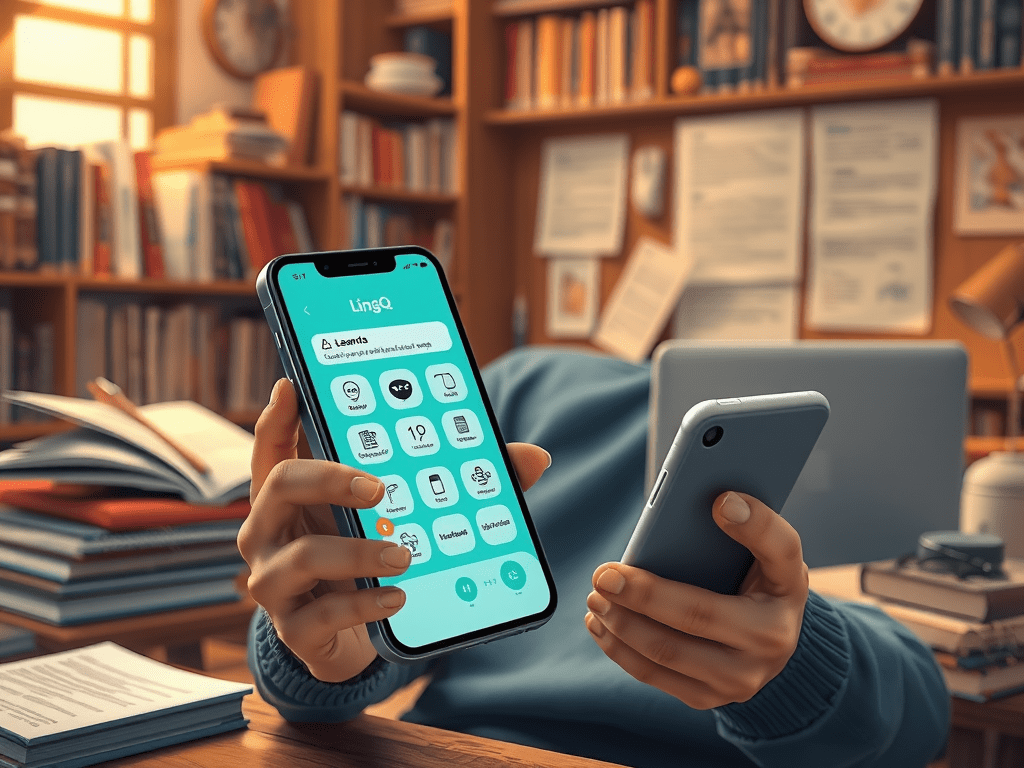
    It’s impact on language learning is no exception (neither is the attempt to create a cover image for this blog post). Since so much modern language content is already digital, AI has naturally found its place there as well.

    So how exactly is AI helping me?

    Let me give you a concrete example.

    Lately, I’ve been doing much of my German learning on an app called LingQ. I find it to be one of the best ways to consume large amounts of comprehensible input. There has been a lot of discussion in the language learning world about how comprehensible input is foundational to acquisition, and I’ve personally found that increasing my vocabulary through meaningful exposure keeps me motivated and moving forward.

    What’s powerful about LingQ is that you can upload your own content. You can import transcripts from YouTube or Netflix, add Word documents, or paste in text directly. That flexibility opens the door for AI integration.

    Here’s what I’ve been doing:

    I use AI tools like ChatGPT or Gemini to create targeted grammar lessons for me in German. For example, if I’m working on a specific topic like werden vs. würden or the Konjunktiv II, I’ll ask AI to:

    • Introduce the grammar topic clearly
    • Provide example sentences
    • Embed the structure inside a short story
    • Increase the complexity gradually

    Then I upload that lesson into LingQ.

    What makes this combination powerful is that LingQ allows instant sentence translation. If I’m unsure about nuance, I can quickly check the English equivalent to understand when and why a structure is used. German sentence structure is different from English, especially with word order and subordinate clauses, so being able to dissect sentences carefully is extremely helpful.

    As a native English speaker, sentence structure is one of the biggest hurdles in German. Moving from B1 to B2 means gaining control over conditionals, connectors, and more complex clause construction. AI allows me to focus precisely on what I need to improve.

    Instead of searching through random lessons hoping someone covers the topic I’m struggling with, I can generate exactly what I need, instantly.

    That level of customization is new.

    Another way AI helps is through features built directly into language apps. LingQ, for example, has an AI voice tool. When I upload a short story or grammar lesson, it can generate a natural-sounding audio file. That means I can:

    • Listen while walking or driving
    • Read and listen simultaneously
    • Reinforce pronunciation
    • Improve rhythm and intonation

    This combination of reading and listening strengthens comprehension significantly. It turns a static text lesson into an immersive experience.

    So for me, AI works on two levels:

    1. External AI tools like ChatGPT or Gemini help me generate structured lessons and ask specific grammar questions.
    2. Built-in AI features inside language apps enhance input, audio, and interaction.

    I’m not using AI to do the thinking for me. I’m using it to design more intentional practice.

    Instead of passively consuming whatever content is available, I’m building targeted lessons around my weaknesses. That feels efficient and deliberate. And at the B2 level, deliberate practice matters.

    AI doesn’t eliminate the need for real conversations or human interaction. It is still my goal to be able to connect with people in my target language. But it dramatically lowers the friction between identifying a weakness in that targtet language and practicing it.

    And for an intermediate learner trying to move from understanding German to expressing themselves in it — that makes all the difference.
  • How I Use ChatGPT to Learn Languages: My Favorite Prompts and Strategies

    How I Use ChatGPT to Learn Languages: My Favorite Prompts and Strategies

    Introduction

    As language learners, we’re always talking about immersion — textbooks, regular books, audiobooks, podcasts, YouTube channels, courses, what have you. And now AI is quickly becoming a part of that process and conversation. It’s already showing up in our daily routines, sometimes behind the scenes and sometimes directly when we open ChatGPT to ask a question or get feedback.

    For me, ChatGPT has become part of my daily study routine. It’s like having a patient tutor who never gets tired of my grammar mistakes. I’m currently learning German, Spanish, and Hungarian — all while working full-time — so I’ve had to find ways to make my study time more efficient.

    AI gets talked about in nearly every area of life right now, and while I don’t use it for everything, it does help me streamline a lot of the smaller, repetitive tasks — like lesson planning, outline creation, and quick grammar checks.

    Here are the exact ChatGPT prompts I use every week for vocabulary, grammar, writing, and conversation practice — and how they help me study smarter, not harder.


    Why ChatGPT Works for Language Learning

    Like a lot of AI tools, ChatGPT makes language learning both more accessible and more efficient. It gives instant feedback and corrections, adapts to your level (whether you’re A1 or C2), and can mimic simple real-life conversations.

    For example, if I just finished an iTalki lesson and there was something I didn’t quite understand — maybe my tutor said a phrase I couldn’t keep up with — I’ll go to ChatGPT and recreate that conversation. I might say:

    “Pretend you’re my tutor. I’m a B1 German learner. We just talked about daily routines, but I didn’t understand part of what you said. Can you write out that dialogue again slowly and explain it in English?”

    Within seconds, I have a version I can study, highlight, or reuse.

    It’s also great for decision-making paralysis. Let’s say I want to study reflexive verbs in German but don’t know where to start. I can simply ask:

    “Give me 20 example sentences in German practicing reflexive verbs. I’m at a B1 level.”

    Or even:

    “What are the 20 most common reflexive verbs in German? Give me both the English translation and a short example sentence.”

    Done. No flipping through pages, no Googling for exercises. It’s quick, clear, and customizable.


    My Prompts for Vocabulary Building

    Decision fatigue is a real problem when learning a language. Some days, you just don’t know how to study. ChatGPT takes that off your plate by instantly generating structure.

    Here are a few of my go-to prompts:

    1. “Give me 20 words about daily routines in German with example sentences.”
    2. “Create a mini-quiz to test me on these words: [insert list].”
    3. “Write a short story using these 10 Spanish words about travel.”

    Within seconds, I have an exercise, explanation, or even a mini-lesson plan. It turns passive vocabulary lists into something active and usable.

    I’ll usually transfer new words into LingQ, a spreadsheet, or a notebook. The point isn’t just memorizing — it’s using those words in real context, and ChatGPT helps create that context instantly.


    My Prompts for Grammar Practice

    This is where I focus on precision and structure. Grammar can feel intimidating, but with AI, I can break it down into smaller steps.

    Here are two ways I use it:

    1. Quick explanations:
      “Explain the difference between war and wäre in German with examples.”
    2. Corrections and rewrites:
      “Take a look at this paragraph I wrote in Spanish and tell me what mistakes I made. Then rewrite it correctly and explain why.”

    I’ll often ask ChatGPT to first explain in English, then again in the target language so I can see both sides. That repetition helps me retain the concept better.

    These short grammar sessions make it easier to understand why something is correct, not just memorize the rule.


    My Prompts for Speaking and Writing

    Sometimes you don’t have a conversation partner available — and that’s where AI comes in handy. I use ChatGPT to simulate conversations or writing exchanges that feel surprisingly real.

    Here are a few examples:

    • “Pretend we’re friends who haven’t seen each other in a while — write me a letter and let’s be pen pals.”
    • “Act as my coworker. Let’s practice a workplace email exchange.”
    • “Ask me five follow-up questions like a native speaker would.”

    You can easily turn these into low-stakes speaking or writing exercises. I’ll sometimes read my answers aloud, record them, and then paste them back into ChatGPT for correction. It’s practice on demand — flexible, consistent, and gamified.

    It gives you control over your practice environment, allowing repetition until you feel comfortable using the language in real life.


    How to Create Your Own Prompts

    The key to using ChatGPT effectively is specificity. Be clear about your level, your goal, and what role you want it to play. When you use AI, start by answering three questions: Who am I? Who are you? What are we trying to do?

    Example:

    “Act as my A2-level Spanish tutor and quiz me on food vocabulary. I am a A2 level learner who is a native English speaker.”

    Or:

    “Pretend you’re a native Hungarian teacher helping me prepare for small talk at a café. Ask me questions and correct my mistakes. I am new to the Hungarian Language.”

    Think about your weak spots: a confusing textbook section, an iTalki conversation that tripped you up, or a phrase you’ve always avoided saying. Then build your prompts around those challenges.

    I also recommend asking ChatGPT to summarize what it thinks you’re asking before you start. I’ll say:

    “Can you explain what you think my goal is and how you’re going to help me achieve it?”

    That ensures you’re on the same page.

    Lastly, keep a running list of your favorite prompts in a Notes app or Google Doc. Over time, you’ll build your own AI-powered toolkit.


    Final Thoughts

    I think AI does a great job of making language learning more accessible, flexible, and efficient. It’s not perfect, and it definitely doesn’t replace human teachers — after all, learning a language is about connecting with other people, not just an algorithm.

    AI helps us practice, prepare, and improve — but human connection is still the heart of it.

    Maybe that’s a topic for another post.

    For now, I encourage you to try one of these prompts today — or tell us what prompts you’ve been using. How do you use AI for language learning? What are its downsides, or how could it be improved?

    Thanks for reading.