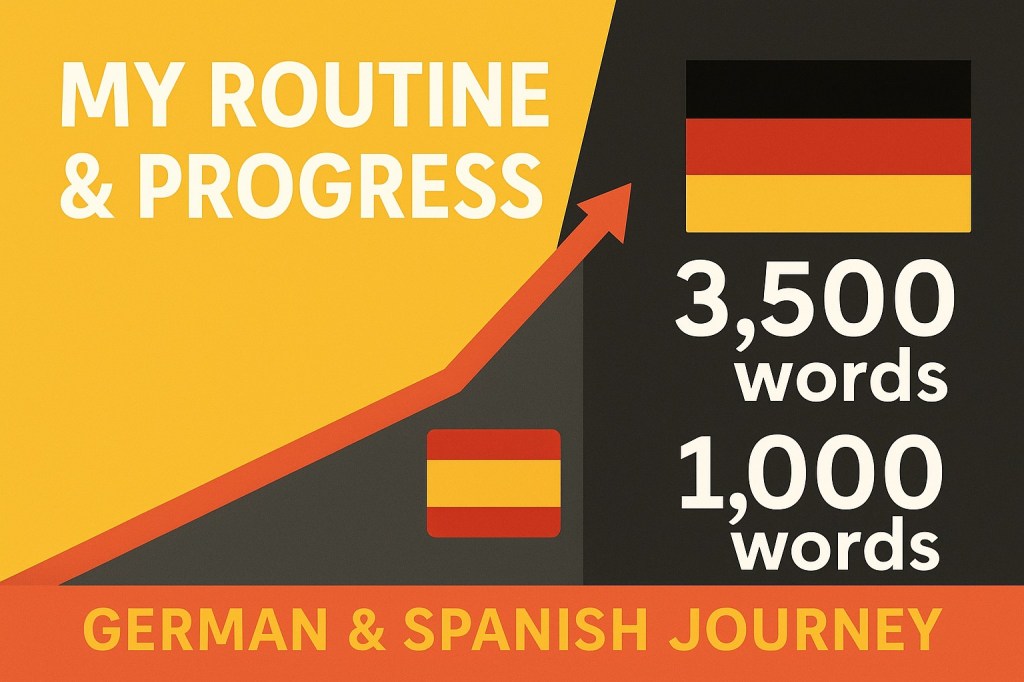
It’s been a while since I’ve written here, so I wanted to give a quick update on what I’ve been doing with language learning. My idea for this blog has always been to track my progress and maybe build a system that I and other learners could reuse. Nothing fancy — just something consistent.
Lately, I’ve been using LingQ a lot, and it’s become my main tool for both German and Spanish. What I like about it is how simple it is: you just read or listen to stuff in your target language, and the app helps you track words you know, words you’re learning, and words you don’t know yet. Over time, it shows you stats on how much you’ve read, how many new words you’ve added, and how your vocabulary is growing. That kind of feedback makes it easier to see that I’m making progress.
How I Use LingQ
If I want to focus on grammar, I can go through short lessons. If I want real content, I can pull in YouTube transcripts or even Netflix shows. It’s flexible, which makes it more interesting than sticking to just a textbook or one app’s lessons.
The best part is how it handles unknown words. Normally, if I’m reading and don’t know a quarter of the words, I’d just get frustrated. I might guess the general meaning, but it’s easy to lose motivation if I have to keep stopping to look things up. With LingQ, I can click on a word, see the meaning, and keep going. That keeps the flow going and makes reading feel more doable.
My Current Routine
Here’s what my routine looks like right now:
- About 30 minutes of reading on LingQ, sometimes silently, sometimes out loud.
- Around 20–30 minutes of listening, either with the text open or in the background while I’m doing something else.
- One 30-minute speaking session a week in German with a tutor.
Most of my focus is on German, but I’m keeping Spanish in the mix too. The speaking part is the hardest for me — it’s the part I’ve always been most nervous about — but I can feel myself getting a little more confident each week. Reading and listening help build the base, but speaking forces me to actually use what I know.
What’s Working
The mix of reading, listening, and speaking feels balanced. When I watch shows or listen to podcasts now, I sometimes notice words I just saw on LingQ. That tells me it’s working. It’s a slow process, but the connections are starting to click.
I also like that LingQ isn’t gamified. There are streaks and coins you earn, but it doesn’t feel like the main part of the app. I couldn’t tell you my current streak or amount of coins I have. However, it does track the words you know and I’m hovering around 3,100 for german. If we’re going to track stats, that’s one that I care more about.
What’s Next
My plan is to keep this routine going daily — or as close to daily as possible. Even 20–30 minutes is enough to feel like I’m moving forward. Next, I want to experiment more with importing my own content, especially Netflix shows and YouTube videos, so that I’m learning from things I’d actually be watching anyway.
I’ll also keep writing here with updates every week or two. My goal is to make these posts straightforward progress logs that others could copy and use for their own studies.
Wrapping Up
So that’s where I’m at: a simple routine, mostly built around LingQ, with some speaking practice mixed in. It’s not perfect, but it’s consistent, and that’s what matters. I’ll share more soon about how I combine LingQ with Netflix to make study sessions more immersive.
Until then, I’ll keep reading, listening, and speaking whenever I can.
 Next Adventure Languages