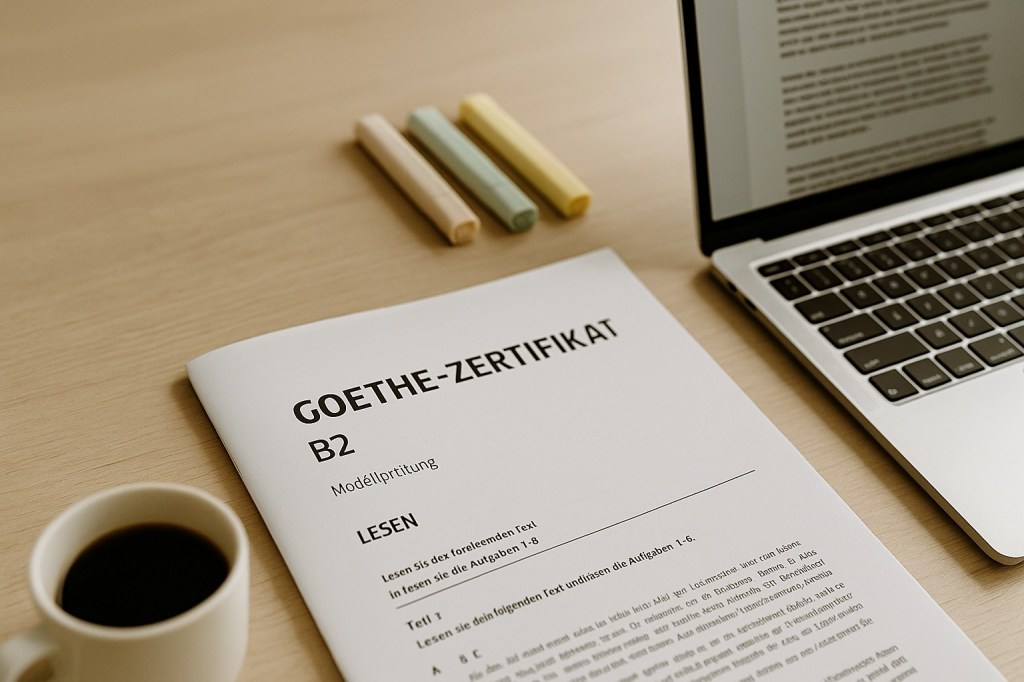
I finally did it — I signed up for the Goethe B2 exam and put a real date on the calendar. I’ve been learning German while working full-time, and I wanted something concrete to aim for. Over the past few months, I’ve felt myself hovering around the same level, comfortable but not improving. Setting an exam date gives me a deadline and forces me to confront weak spots I usually avoid.
This post is about why I registered, what the certification means to me, and how I’m building a realistic plan from now until this summer.
Why I Wanted a Base Certification
I’ve been learning German on and off for about five years. At some point, I wanted something that reflects that effort — not to show off, but as a personal benchmark. I also like the idea of having a recognized certification in case I ever want to study or work in Germany. It’s the largest economy in Europe, and the idea of building part of my life there has always been in the back of my mind.
B2 represents the point where the language stops being fragile. You can function professionally, watch native media without subtitles, and hold your own in fast conversations. Signing up for this exam is my way of saying: I’m committed long-term, and I want to see this through.
And if I fail? Fine. That’s not the point. I’m not learning German to chase a perfect score. I’m learning it because I genuinely enjoy it — and because I want the momentum that a real deadline brings.
It also pushes me out of my comfort zone. I tend to avoid speaking in front of others, and the speaking portion of the exam won’t let me hide from that. It’s uncomfortable, but necessary.
Why Having a Goal Outside of Work Matters
Working full-time creates a predictable routine. I like my job, and I’m grateful for it, but I also want something outside of work that challenges me — something that’s mine. Language learning fills that role. It demands consistency, effort, and patience.
Preparing for the exam keeps me structured, motivated, and mentally sharp. It gives me healthy pressure: a real deadline, a reason to stay consistent, and a sense of purpose beyond my career.
It’s easy to let months pass by without realizing how little progress you’ve made. This exam forces me to stay engaged.
Having a set exam date gives my weeks more structure. Even when work gets busy, I can’t ignore German the way I sometimes might without a deadline. Studying becomes part of my day — like going to the gym or making coffee.
It grounds me and keeps me accountable.
Why I Chose the Goethe B2 Exam Specifically
The Goethe-Institut is recognized around the world — by universities, employers, and immigration offices. That matters to me. If I ever end up studying or working in Germany, this is the certification they’ll recognize.
The exam is balanced:
- reading
- listening
- writing
- and speaking
I’m strong in reading and listening, but writing and speaking still need steady work. Goethe’s format requires improvement in the areas I tend to avoid. And B2 feels like the right challenge — ambitious but realistic with consistent effort.
It also feels good to be evaluated academically after years of casual learning. I want to know how well I can actually use this language.
My Timeline: From Today Until The Exam
I have a little more than six months to prepare. That’s plenty of time, but only if I’m consistent.
Phase Zero (Now → Early December):
Clearing personal tasks I’ve been putting off, organizing my materials, and building a real study plan. Think of it as setting the foundation.
Phases One, Two, and Three (Dec → Summer):
Each phase includes weekly goals built around the four core skills: reading, listening, speaking, and writing. I’m not aiming for perfection — I’m aiming for steady exposure.
My weekly minimum looks like this:
- 30–45 minutes of active study per weekday
- Daily reading or listening
- One speaking session per week
- One written assignment for correction
- Monthly checkpoints to stay on track
I want repeated contact with grammar, vocabulary, and exam-style tasks. Consistency beats intensity.
My Game Plan: How I’m Studying
1. Grammar
Review all B1 foundations to close gaps, then move systematically through the main B2 structures.
2. Vocabulary
Use LingQ, reading, and daily immersion. No flashcard burnout — just steady exposure to real language.
3. Listening
Podcasts, YouTube, news, and anything I actually enjoy.
4. Reading
Novels, articles, blog posts, and short stories — slow but steady.
5. Speaking
Weekly iTalki lessons and shadowing in between to build confidence.
6. Writing
A weekly journal entry that I get corrected and refine over time.
The Journey Begins Now
Signing up for the B2 exam was the first step. Now comes the work — the daily, steady effort that builds real skill. If you’re thinking about learning a language or taking an exam, I hope this gives you a realistic picture of what this stage looks like.
I’ll share updates as I move through each phase and get closer to the exam!
 Next Adventure Languages